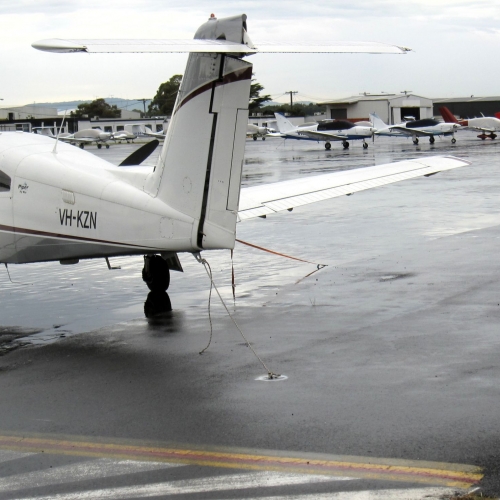
Airports are long-term infrastructure assets that must balance safety, efficiency, sustainability and future growth. Effective airport and aerodrome planning brings together demand forecasting, capacity planning, runway orientation, terminal layout design, airspace integration and environmental safeguarding to ensure safe and efficient operations over the life of the airport.
Early planning decisions are shaped by environmental conditions and regulatory requirements. Wind analysis informs runway orientation, while noise constraints are critical for aerodromes located near residential areas. In Australia, the Civil Aviation Safety Authority Manual of Standards (MOS) Part 139 and International Civil Aviation Organization Annex 14 establish the framework for aerodrome design, safety and compliance.
Operational resilience is also essential. Planning must consider adverse weather, wildlife hazards, maintenance access and efficient airside operations. Smart apron layouts and scalable terminal designs help manage capacity constraints while supporting long-term growth. Community impacts can be reduced through noise modelling and environmental considerations embedded within the airport master plan.
While forecasting uncertainty remains a challenge, phased development and regular review of airport master plans allow aerodrome operators to adapt to changing demand while maintaining safety, compliance and operational efficiency.
At Aviation Projects, we provide trusted advice about airport planning, development and operations, airspace and instrument flight procedure design and aviation safeguarding. Contact us today.
Tags: Airport Master Planning, Aviation Projects, Sustainability, Aviation Safety, Airspace Protection, Aerodromes